





Sant Joan de Labritja
Aquí y allá despunta alguna casita de payés, indefectiblemente semioculta entre chumberas, y de dimensiones en general tan pequeñas como no recuerdo haber visto igual en la isla. Donde el valle se ensancha un tanto aparece la iglesia de Sant Joan, arrimada a las colinas que se alzan por el Norte.
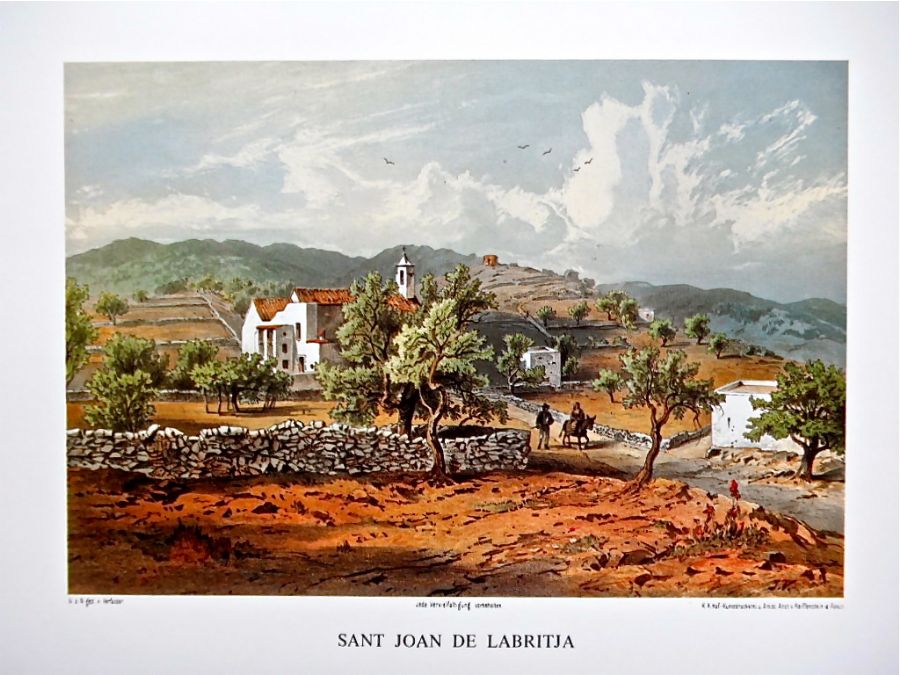 Sant Joan es cabeza del término de igual nombre y sede municipal, aun cuando en realidad consiste de una sola parroquia. En 1860 no se contaba sino cuatro casas habitadas y dos desiertas, todas aisladas. La Parroquia de Sant Joan es considerada, no obstante, una de las más importantes de la isla y antiguamente era la más poblada. En 1840 presentaba un censo de 1.203 almas, en 1.850 de 1.348 y en 1.860 de 1.300. La iglesia, emplazada en una plataforma elevada sobre el valle y reforzada con gruesos muros, es una edificación sencilla, con campanario y porche.
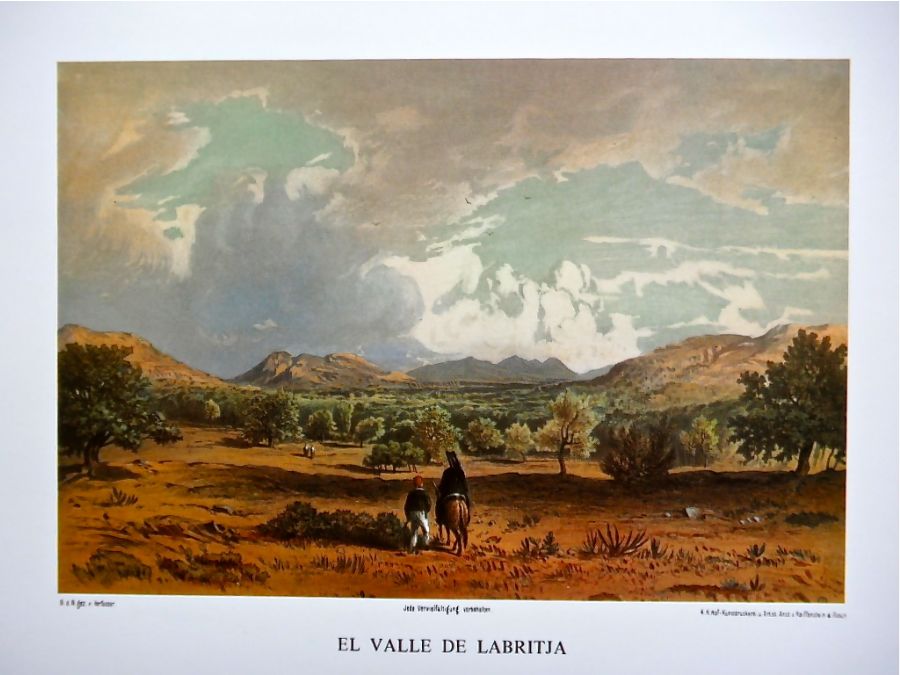
 Un camino casi recto comunica Sant Joan con la ciudad de Eivissa, pasando por Sant Llorenç, distante a una hora y media de marcha. Para llegar a esta localidad hay que regresar al camino ya descrito y progresar por él hasta el arroyo rodeado de adelfas, para descender por la vaguada hasta que esta desemboca en el llamado valle de Labritja, uno de los más importantes de la isla, que sigue al de Santa Eulària quedando separado de éste tan sólo por unas pequeñas elevaciones, y surcado en toda su longitud por el río al que el segundo da nombre y por sus afluentes. Los altos que enmarcan el valle de Labritja son de escasa entidad, pero hermosamente contorneados, con laderas cubiertas de pinos o de algarrobos, olivos e higueras.
Las colinas, por lo común boscosas en el lado Oeste, van haciéndose cada vez más llanas, ya en las proximidades de Sant Llorenç. Tres viejas torres redondas coronan el alto donde asienta la iglesia de esa advocación, y algo más lejos, en un cerro cubierto de bosque divisamos una cuarta.
La parroquia de Sant Llorenç pertenece al término de Sant Joan de Labritja y está muy poco poblada; contaba con 769 almas en 1840, con 858 en 1850 y con 945 en 1860.
Archiduque Luis Salvador de Austria. Las Baleares por la palabra y el grabado. Primera parte: Las Antiguas Pitiusas. Ed. Sa Nostra, Caja de Baleares. Palma de Mallorca. 1.982.